
Emergency lighting: what the monthly test involves and why it gets missed
Emergency lighting is only doing its job if it still works the moment the power goes off, and the only way to know that is to test it. BS 5266-1, the British Standard covering emergency lighting, sets out two separate tests: a short monthly check and a longer annual one. Most buildings understand the annual test needs a specialist, but the monthly one is meant to be done in-house, by whoever manages the building, and it is the check that quietly stops happening once the novelty wears off. This guide covers what the monthly test actually involves, what a pass looks like, and what to do with the result. For how a system is designed, installed and professionally tested from the start, see our emergency lighting service page.
Get a free quote

Tell us about your premises
🔒 Free, no-obligation. We reply within 1 working day. No spam, ever.
- 20+ years’ experience
- Electrical Installation Certified
- ECS card holders
- JIB
- IPAF
- Constructionline
- Chamber of Commerce member

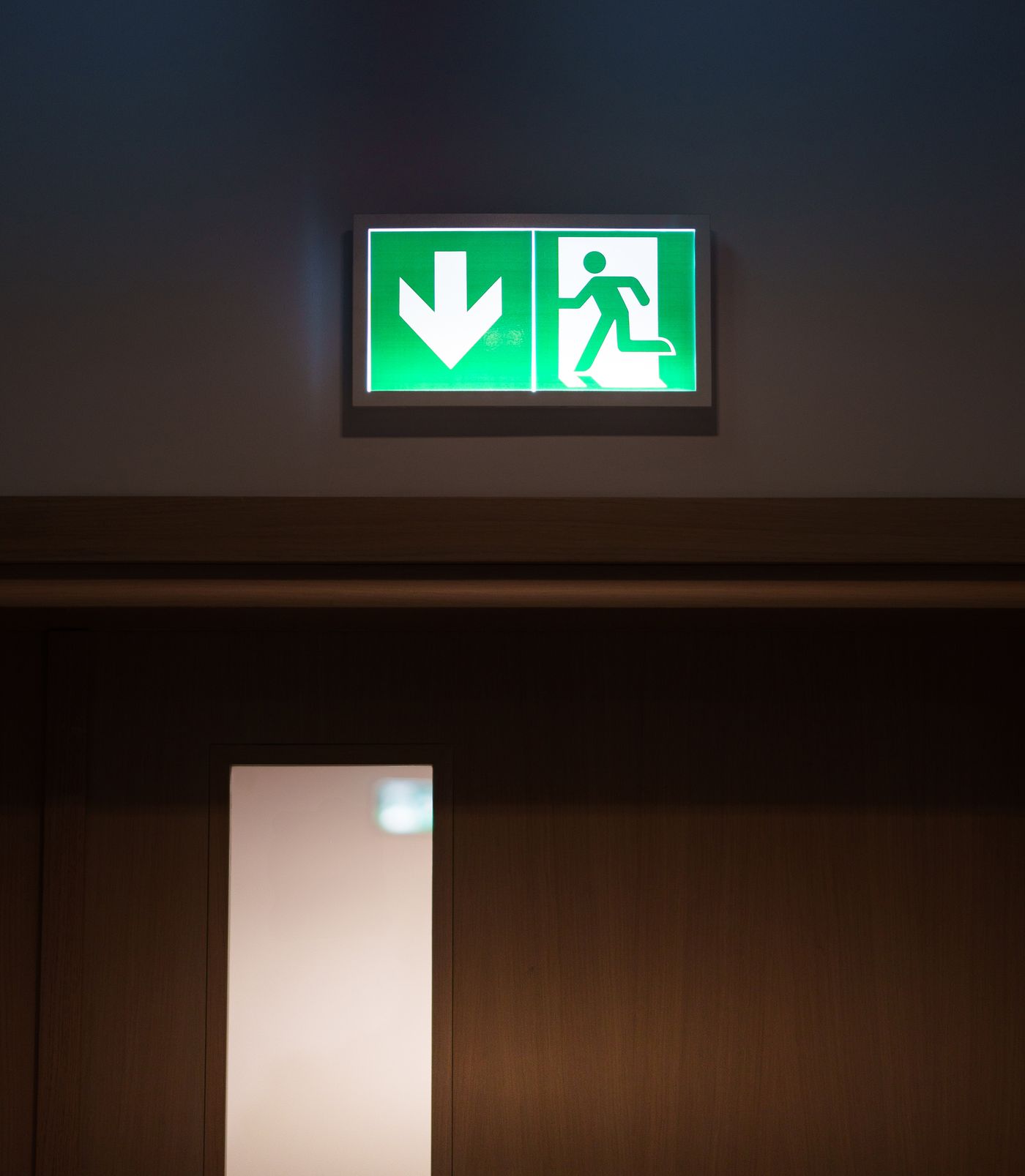

Two tests, two different jobs
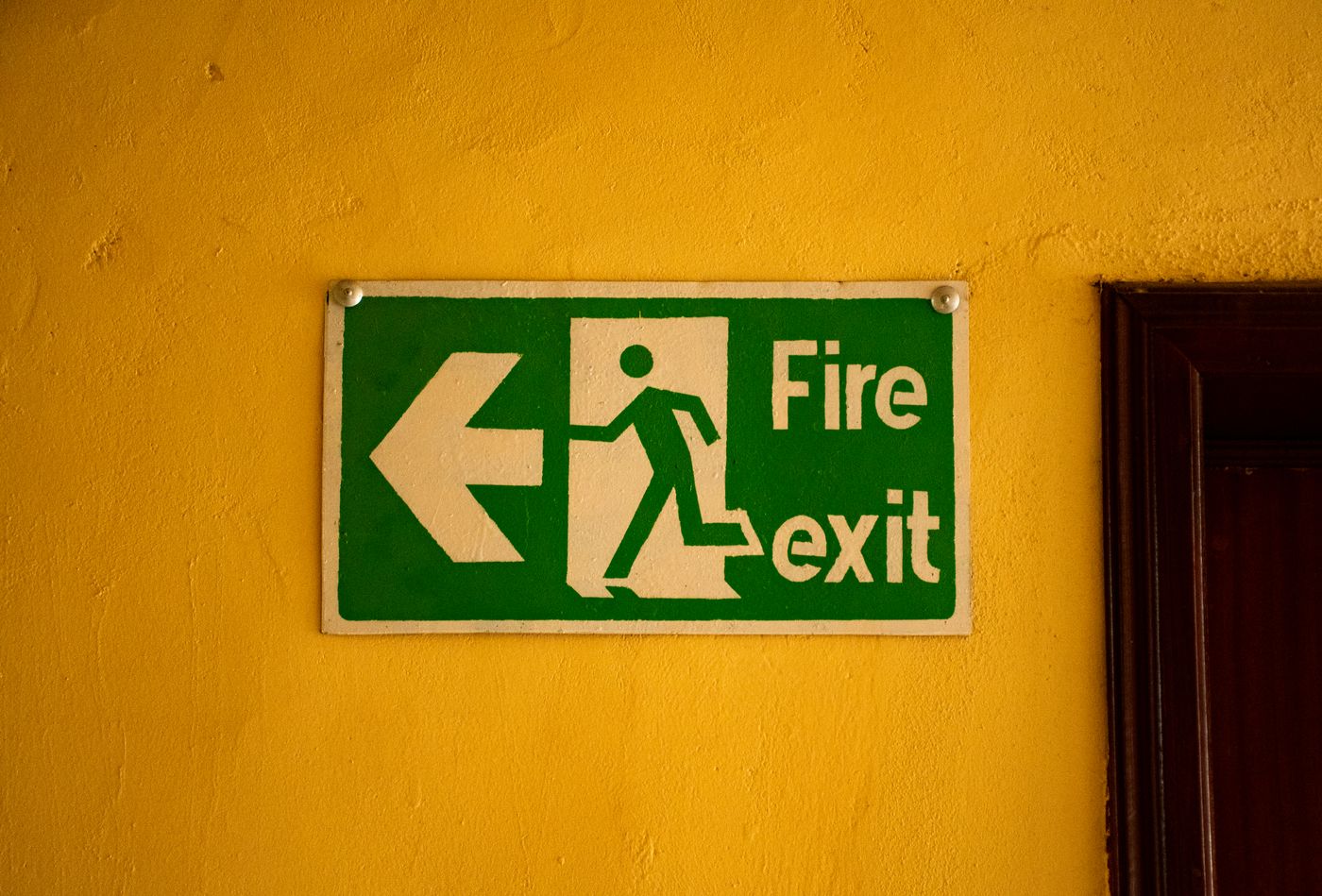
The monthly test is a brief functional check: does every luminaire and exit sign still light up if the mains supply disappears. It takes minutes, not hours, and does not drain the batteries because it only runs long enough to confirm each fitting responds. The annual test is a full duration test, typically running the whole system for its rated three hours, and is disruptive enough that it needs planning around low occupancy. Buildings that only get the annual test done, and skip the monthly one, are missing eleven checks a year that would have caught a failed battery or a dead lamp long before the one time the system has to run at full length.
Have a question about your building?
What the monthly test actually involves
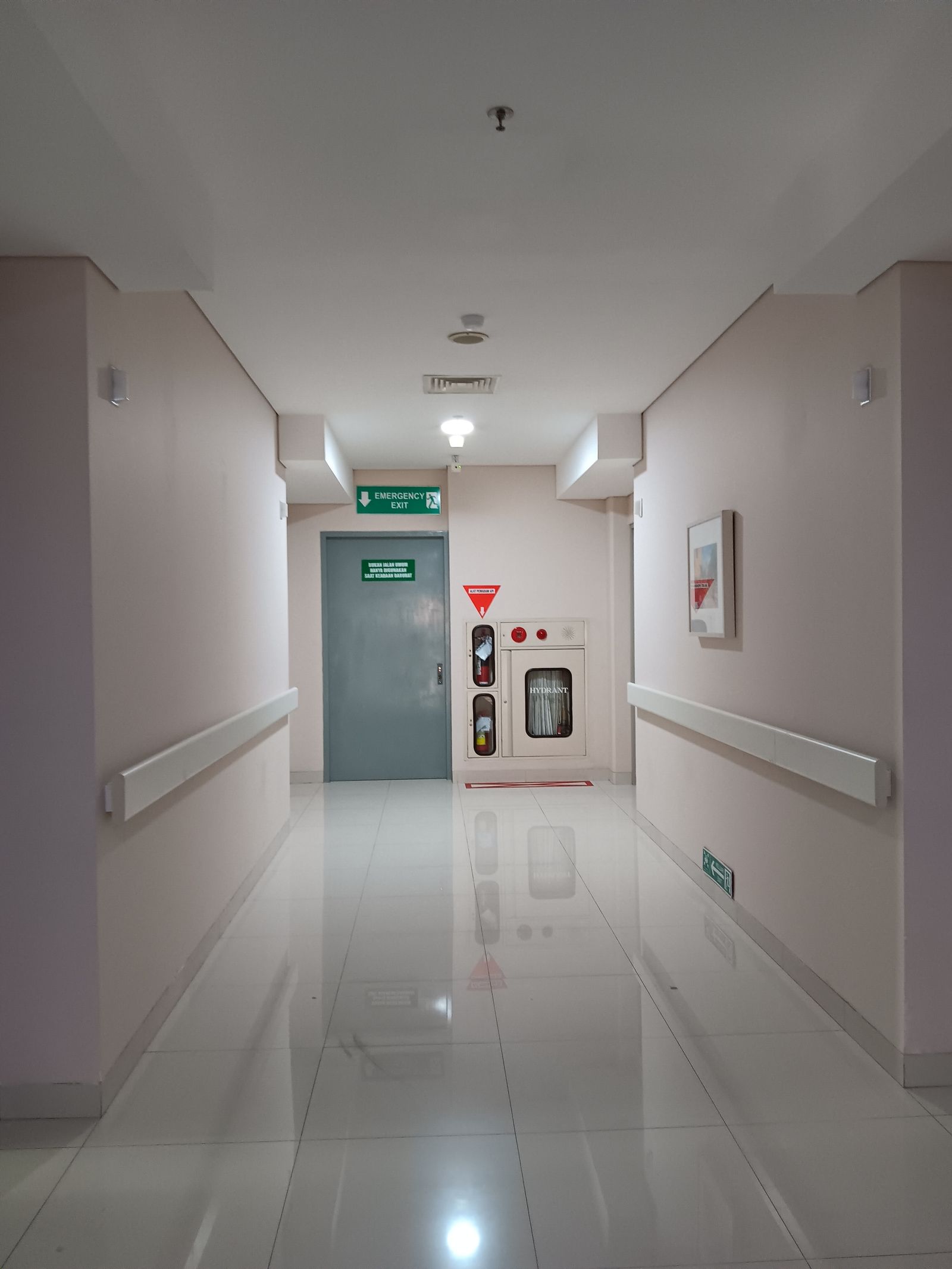
In practice, the monthly test means using a key switch fitted to each luminaire, or a test facility on a central battery panel, to simulate a loss of mains supply for long enough to see whether every fitting responds. Each luminaire and exit sign should illuminate immediately and stay lit for the short period the test runs, generally no more than a minute or two per area, since the point is to see it work, not to run the battery down. It is often called the flick test for that reason: the interruption is brief, and the fitting should recover to normal charging as soon as it ends. Larger buildings usually split the test into zones so it does not all happen at once, and it is worth doing it during quiet hours so a flickering exit sign or a dark corridor does not confuse staff or visitors.
Not sure what your building needs?
Tell us about your premises and we will point you in the right direction. Free, no obligation.
What a pass looks like, and what to flag
A working luminaire lights immediately, at a level clearly brighter than a dim glow, and returns to normal once the test ends. A few things are worth treating as a fail rather than a note for later. A fitting that does not illuminate at all is the obvious one, but slower or partial responses matter too: flickering, a light noticeably dimmer than the fittings around it, or one that takes longer to respond than the rest, usually points to a battery that is ageing or already failing. A charge or fault indicator lit on a central battery panel needs the same attention as an individual luminaire failing. None of these faults are urgent enough to evacuate over, but none should wait until the next monthly test either, since a battery struggling in a one-minute test is unlikely to last a full duration if it is ever needed for real.
Talk it through with someone who does this every day.
Recording the result

Every monthly test needs to go in the system logbook: the date, which areas or luminaires were tested, and what was found, including any faults and what was done about them. This is not paperwork for its own sake. It is the record a fire risk assessment, an inspecting officer or an insurer will ask to see, and a logbook with regular monthly entries is one of the clearest ways to show a building’s emergency lighting is being properly looked after between annual tests. A logbook that jumps from January straight to an annual test in November, with nothing recorded in between, raises more questions than it answers.
The gap most buildings do not realise they have
The most common problem we see is not a system that was designed or installed badly. It is one where the monthly test simply is not happening, or happened for the first few months after installation and then stopped once the person responsible changed job or the routine slipped. Because emergency lighting sits unused in normal daily life, a fitting can fail quietly for months, sometimes only coming to light during the annual test, by which point several faults may have built up rather than one. If nobody in your building can say with confidence when the last monthly test was carried out, or where the results are recorded, treat that as a gap to close rather than assume the system is fine because nothing has gone wrong yet.
Want a price for your premises?
Speak to a fire safety expert
Talk it through with our team. We reply to every enquiry within 1 working day.
Is the monthly test a legal requirement

Under the Regulatory Reform (Fire Safety) Order 2005, the responsible person for a non-domestic building in England must ensure that escape routes, including any emergency lighting serving them, are kept in efficient working order. BS 5266-1 is the recognised standard for how that is demonstrated, and its monthly and annual testing regime is what most fire risk assessments and enforcing authorities expect to see evidence of. Since October 2023, changes brought in under the Building Safety Act 2022 have also required the responsible person for non-domestic premises to keep a written record of fire safety arrangements, including testing history. A fire risk assessment is usually where a missing or inconsistent testing regime first gets flagged.
A few common questions
Who should carry out the monthly test? Anyone on site shown how the key switches or test facility work and what to record. It does not need to be an engineer, but it should be the same routine and the same person each month, so it actually happens.
Can we do the annual test ourselves? In principle, though the full duration test takes the whole system offline for hours and needs planning around occupancy, so most buildings have it done as part of a scheduled service visit rather than in-house.
Prefer us to look at it on site?
Talk to us about your testing routine
If you are not sure whether your monthly emergency lighting checks are happening, being recorded properly, or covering everything they should, we can help you set up a routine that holds up to scrutiny, or take on the testing and record-keeping ourselves. Get in touch through our contact form and tell us about your building, or see our emergency lighting page for how we design, install and maintain these systems from the start.
Ready to get started?
Send us a few details and we will come back to you with clear next steps and a written quote.
Speak to Chief Fire Safety
Tell us about your premises and what you need, and we will get back to you to arrange the next step.