Which fire extinguisher does your premises actually need
Most people walking past a fire extinguisher in a corridor could not tell you what it would do if they had to use it. It is red, it is on the wall, and that is usually as far as the thought goes until something is actually on fire. That gap matters more than it looks, because the wrong extinguisher on the wrong fire can make things worse rather than better, and it is one of the most common gaps we find when we survey a building’s existing provision.
This guide is about working out what you have, whether it is right for the risks in your building, and what tends to be wrong when it is not. For the full picture of fire classes, extinguisher types and how we specify and service them, see our fire extinguishers page. If you are not sure your building’s provision has ever been properly assessed, that is a question for a fire risk assessment, not something to guess at from a label.
Get a free quote

Tell us about your premises
🔒 Free, no-obligation. We reply within 1 working day. No spam, ever.
- 20+ years’ experience
- Electrical Installation Certified
- ECS card holders
- JIB
- IPAF
- Constructionline
- Chamber of Commerce member


Reading the label without being an expert
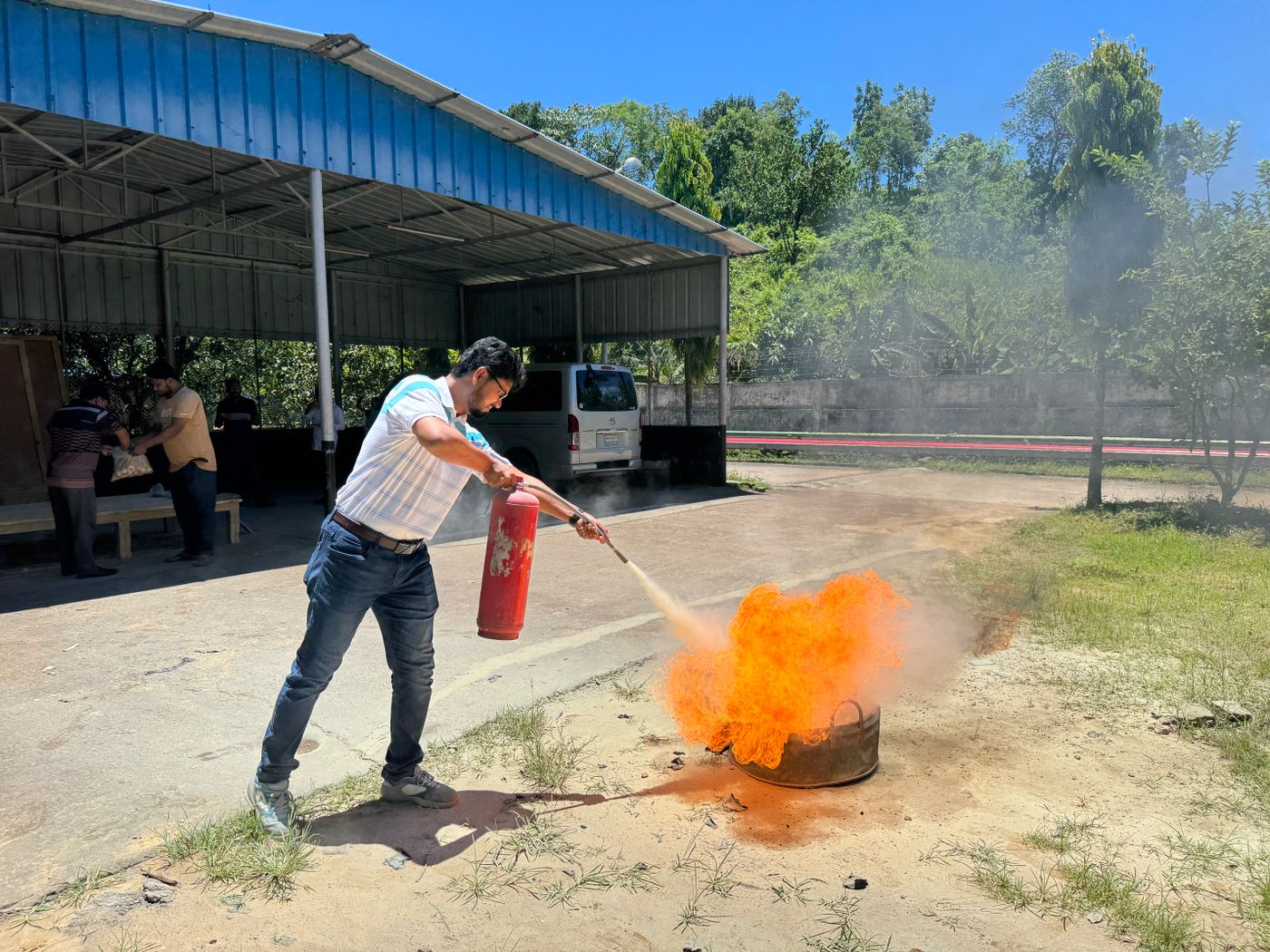
Every UK extinguisher is red, so colour on its own tells you nothing. What identifies the type is the coloured band or panel on the label, covering somewhere between five and ten per cent of the body under BS EN 3. Stand close enough to read it and you can work out what an extinguisher is in a few seconds.
- No band, or a red panel: water. Effective on burning solids like paper, wood and fabric, and nothing else.
- Cream panel: foam. Covers solids and flammable liquids.
- Black panel: CO2. Covers flammable liquids and is safe to discharge near live electrical equipment.
- Blue panel: dry powder. Covers solids, flammable liquids and flammable gases.
- Yellow panel: wet chemical. Designed for cooking oils and fats.
The label also states what it is rated for in plain language, usually with the fire class letters (A, B, C, F) printed near the top, and a fire rating number and letter combination such as 13A or 55B that indicates how much fire of that class it can handle. If the label is faded, missing or the extinguisher has clearly been repainted or relabelled at some point, treat that as reason enough to have it checked rather than assuming it is still what it says it is.
Have a question about your building?
Why using the wrong type is genuinely dangerous
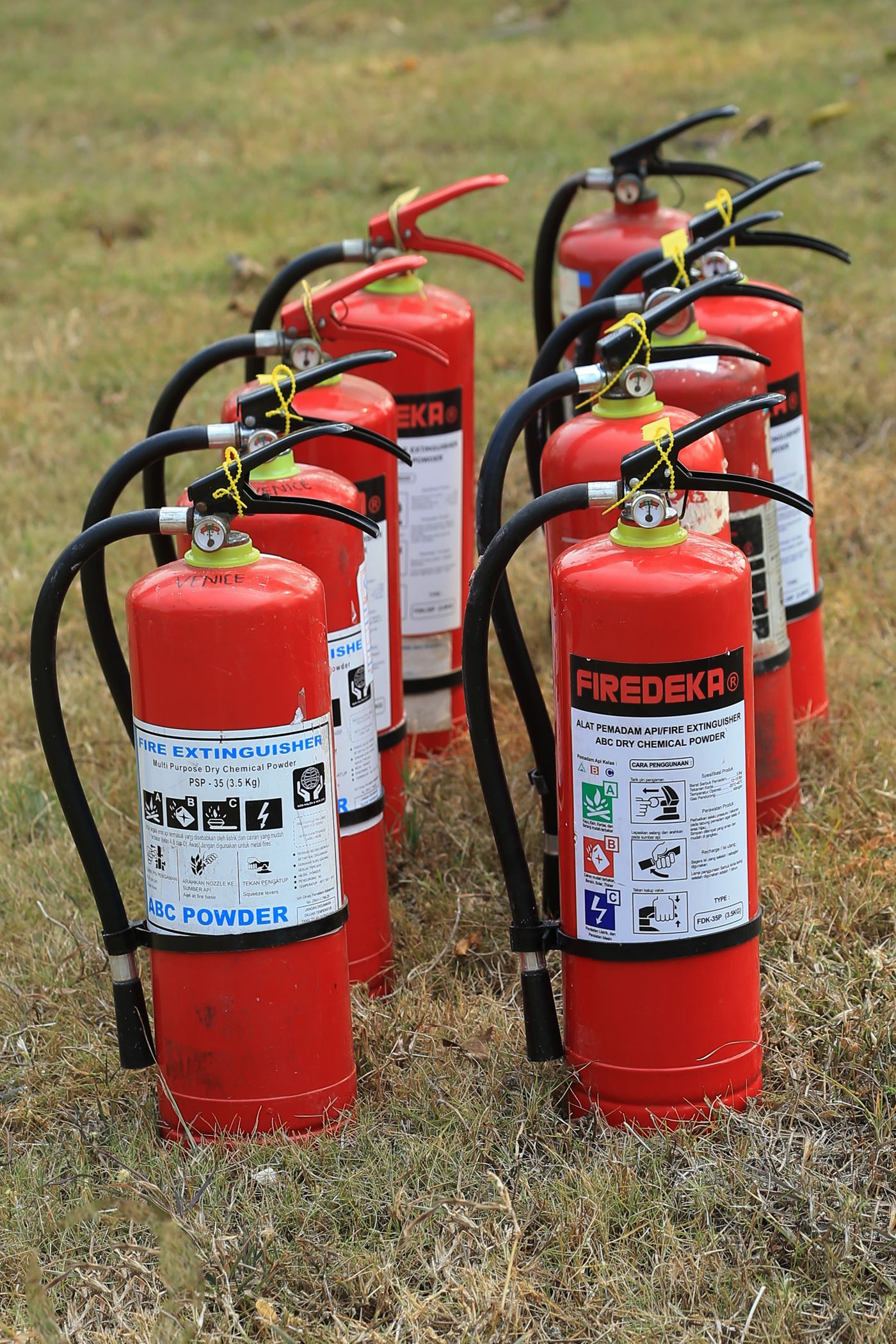
A fire extinguisher is not a general-purpose tool. Each type works by a different mechanism, cooling, smothering, or interrupting the chemical reaction of combustion, and using the wrong one does not just fail to help, it can actively make a fire more dangerous.
Water conducts electricity. Aiming a water extinguisher at anything involving live electrical equipment risks passing a current back through the jet to the person holding it, on top of doing nothing useful against the fire itself. This is the single most common misunderstanding we come across: someone reaches for the nearest extinguisher, sees flames near a piece of equipment that is still plugged in, and uses water because that is what is closest.
Water and foam are equally dangerous on a burning fat or oil fire. Both agents are heavier than hot oil and sink beneath it, flashing instantly to steam and throwing burning oil upward and outward as a fireball. This is why commercial kitchens need wet chemical extinguishers specifically, and why a water extinguisher stored in or near a kitchen is a genuine hazard rather than a spare option.
Dry powder is effective across a wide range of fire classes but is unsuitable for use in a small enclosed room. The discharge reduces visibility to almost nothing within seconds and can affect breathing, which turns a contained fire into a situation where the person using the extinguisher cannot see the exit. It also leaves a fine residue that can damage sensitive electronics, so a powder extinguisher discharged near IT equipment can cause more lasting damage to the room’s contents than the fire would have.
None of this means staff need to memorise the technical detail. It means the extinguisher within reach of a given risk needs to already be the right one, so nobody has to make that judgement call in the moment.
Not sure what your building needs?
Tell us about your premises and we will point you in the right direction. Free, no obligation.
A quick guide to what most premises need
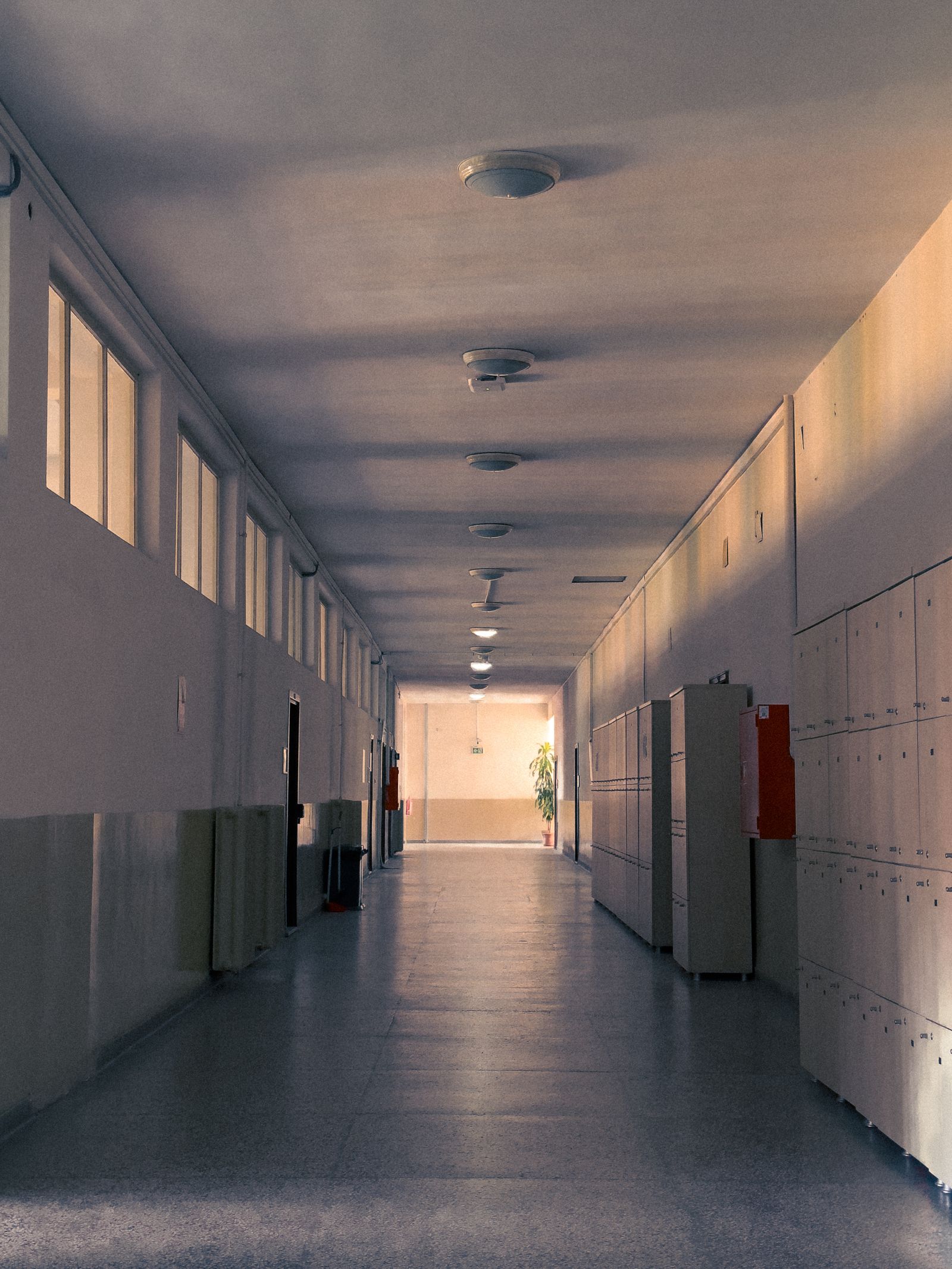
This is a starting point, not a substitute for an assessment. What a specific building actually needs depends on its layout, processes and materials, and that is what a fire risk assessment establishes room by room.
| If your premises has… | You are likely looking at |
|---|---|
| General office space, desks, paper, furnishings | Water extinguisher as the base provision |
| A server room, comms cabinet or area with sensitive electrical equipment | CO2, sited close to the equipment |
| A staff kitchen with a kettle and microwave only | Water extinguisher may be sufficient; check against what is actually installed |
| A commercial kitchen with fryers or large-scale cooking | Wet chemical, in addition to whatever covers the rest of the kitchen |
| A workshop, plant room or store with flammable liquids | Foam or dry powder, depending on ventilation and enclosure |
| A warehouse or industrial unit with mixed materials and vehicle movement | Dry powder, positioned where powder discharge will not obscure escape routes |
A building with more than one of these areas needs more than one type of extinguisher, positioned according to what is actually near it rather than one type covering the whole premises. An office with a small kitchenette and a server room is a common example: three different risks under one roof, each needing its own provision within reach.
Talk it through with someone who does this every day.
What we typically find is wrong during a survey

When we survey an existing installation, a handful of issues come up repeatedly.
The extinguisher present does not match the risk. Most often this is a water extinguisher left in or near a kitchen, or general dry powder provision in an office where it was never needed and now sits as an unnecessary hazard if it were ever used indoors.
Provision has not moved with the building. A room that was general storage when the extinguishers were installed is now a server room, or a kitchenette has been added without an extinguisher to match, and nobody has revisited the layout since.
Service dates have lapsed. An extinguisher that looks fine on the wall can be out of date for its annual service under BS 5306-3, or, for older units, due the extended service that involves a full discharge and refill. A pressure gauge reading correctly is reassuring but is not the same as a current service record.
Extinguishers are inherited from a previous occupier with no documentation. This is common in units that have changed tenants, where whatever was on the wall when the keys were handed over has simply stayed there, matched to a previous business’s risks rather than the current one.
Any of these on their own is worth acting on. Together, they are usually a sign that extinguisher provision has never been assessed against the building as it currently operates, which is exactly what a fire risk assessment is for.
Getting your provision checked properly

If you are working through this guide because you are not confident about what is currently installed, the reliable next step is to have it looked at rather than continue guessing from labels. We survey existing extinguisher provision against the risks actually present in a building, identify anything mismatched, out of date or missing, and set out what bringing it up to standard involves. Full detail on how we select, position, supply, install and service extinguishers is on our fire extinguishers page.
Contact us with a few details about your premises and we will arrange a survey.
Want a price for your premises?
Speak to a fire safety expert
Talk it through with our team. We reply to every enquiry within 1 working day.
Frequently asked questions
Can one extinguisher cover more than one fire class? Yes. Foam covers solids and flammable liquids, dry powder covers solids, liquids and gases, and wet chemical covers cooking oils as well as solids. None of them covers every class, which is why a building with several distinct risks usually needs more than one type.
Is it ever acceptable to have no extinguisher in a room? It depends on what the room contains and how far it is from the nearest one. A fire risk assessment sets the maximum distance someone should have to travel to reach appropriate cover, so a small room close to a fire point may not need its own unit, while an isolated area some distance from other provision usually does.
What should I do if I find an extinguisher with no visible service label? Treat it as unverified rather than assume it is fine. Report it so it can be checked, and in the meantime do not rely on it as your only provision for that area if an alternative is nearby.
Does the number on the label matter? The rating number indicates firefighting capacity for that class, higher generally meaning more capacity, but it is not something to select on its own. The type has to match the fire class before the rating becomes relevant.
Speak to Chief Fire Safety
Tell us about your premises and what you need, and we will get back to you to arrange the next step.