
Fire alarm monitoring for commercial buildings
A standalone fire alarm only helps the people who can hear it. Sounders and visual indicators work well while a building is occupied, but outside working hours, overnight, or across a site nobody walks through at weekends, an activation can go unheard until someone arrives the next morning. Monitoring closes that gap by carrying the alarm signal beyond the building itself, so a fire condition reaches somewhere other than an empty room.
We design and install fire alarm systems as part of fire alarm installation and keep them working through servicing and maintenance, and monitoring is something we can specify alongside either, on a new system or one that is already in service. This page explains what monitoring does, why commercial premises use it, and the arrangements worth discussing for your building. For the wider picture of how a fire alarm system operates across its life, see our fire alarm systems page.
Get a free quote

Tell us about your premises
🔒 Free, no-obligation. We reply within 1 working day. No spam, ever.
- 20+ years’ experience
- Electrical Installation Certified
- ECS card holders
- JIB
- IPAF
- Constructionline
- Chamber of Commerce member

What fire alarm monitoring does

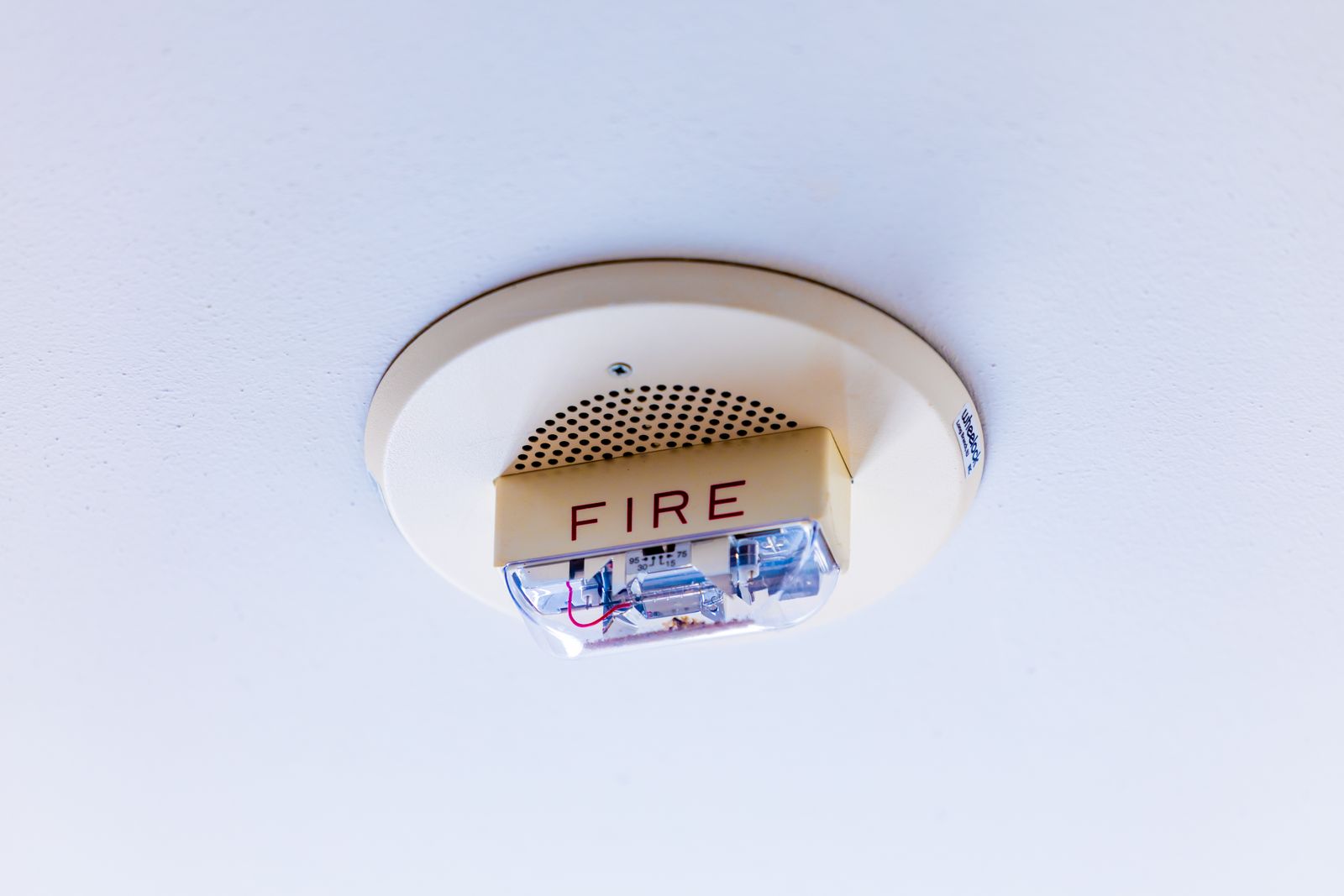
A fire alarm panel already knows when a detector or call point has activated. Monitoring gives that information somewhere to go once it leaves the panel. Instead of relying entirely on a sounder being heard, the panel sends a signal out, over a telephone line, an IP connection, a mobile network, or a combination of these, to a destination set up to receive and act on it.
What happens with that signal depends on how the monitoring is configured. It might reach a nominated person or team responsible for the building, trigger a call to a keyholder, or connect through to a dedicated Alarm Receiving Centre (ARC) set up to handle fire signals around the clock and pass them on to the fire and rescue service. Each of these is a different arrangement with a different cost and a different response, and the right one depends on how the building is used, how often it is occupied, and what the responsible person under the Regulatory Reform (Fire Safety) Order 2005 decides is proportionate for the risk. We can talk through which arrangement suits your system and help you specify it against your building’s risk profile.
Have a question about your building?
Why commercial premises monitor their alarm signal
Several practical pressures push commercial buildings toward monitoring rather than leaving a system to sound and wait.
Unoccupied periods. Warehouses, industrial units, retail stock rooms and office buildings all have hours, and often days, when nobody is on site. A fire that starts in an unoccupied building has longer to develop before anyone notices unless the alarm signal reaches someone away from the premises.
Fire and rescue service attendance policies. Fire and rescue services across England increasingly attend automatic fire alarms differently depending on whether the alarm has been confirmed as a genuine fire. West Midlands Fire Service, for example, operates a mobilising policy under which Fire Control receives automatic fire alarm calls through an Alarm Receiving Centre, a member of the public dialling 999, or an autodialler, and adjusts its response accordingly. London Fire Brigade has gone further, and from October 2024 stopped attending most non-residential automatic fire alarms between 7am and 8.30pm unless a fire has also been confirmed by a 999 call. The direction of travel across UK fire services is the same: an alarm that reaches a monitored route with a means of verifying the signal is treated differently from one that simply sounds. That makes the arrangement behind a system, not just the system itself, part of what determines how quickly help arrives.
Insurance conditions. Commercial insurers frequently set monitoring, or a specific standard of monitoring, as a condition of cover for higher-risk premises, unoccupied buildings or sites with significant fire loading. It is worth checking your policy wording, or asking your insurer directly, before deciding what level of monitoring your building needs.
Continuity of an existing system. Where a building already has a fire alarm that has never been monitored, adding it later does not usually mean replacing the system. In most cases a signalling device is added to the existing panel, which is one reason monitoring is worth reviewing at a routine service visit rather than treated as a separate project.
Not sure what your building needs?
Tell us about your premises and we will point you in the right direction. Free, no obligation.
How a monitored system differs from a standalone one

A standalone fire alarm system is complete in itself: detection, a panel, and local warning devices, all built to BS 5839-1, the British Standard for fire detection and alarm systems in non-domestic premises. Monitoring adds a communication layer on top of that system rather than changing how the detection and warning parts of it work. The panel still needs to be correctly designed, installed and serviced regardless of whether it is monitored, and a monitored signal is only as reliable as the system generating it.
The practical difference shows up in what happens after an activation. On a standalone system, the response depends entirely on someone within earshot noticing and acting. On a monitored system, the signal reaches its destination whether or not anyone is in the building, and what happens next depends on the arrangement in place, whether that is a call to a nominated contact, a message to a facilities team, or a connection through to an ARC. The signalling path itself also matters: a single path over a telephone line can fail if the line is cut or the exchange is affected, which is why dual-path arrangements, combining a landline or IP connection with a mobile network, are commonly specified for premises where reliability matters most.
Talk it through with someone who does this every day.
Arrangements to consider for your building
Monitoring is not a single fixed product, and the right specification depends on your building rather than a default setting. Points worth discussing before a system is monitored, or when reviewing one that already is, include:
- Who or what the signal should reach first: an on-site or nearby contact, a facilities or security team, or a monitoring service set up to receive fire signals directly.
- Whether the building needs a single signalling path or a dual-path arrangement for resilience.
- How the arrangement fits with any existing intruder alarm monitoring already in place. Many commercial premises run intruder alarm monitoring alongside fire alarm monitoring, and it is worth considering both together when signalling equipment is being specified.
- What your insurer requires, if a monitored condition applies to your policy.
- How out-of-hours contact details, keyholder information and any response instructions are kept current, since a monitoring arrangement is only useful if the people or services it relies on can actually be reached.
We do not assume every building needs the same answer to these questions. Get in touch through our contact form and we can talk through what your premises actually needs, rather than sell a fixed package.
Fitting monitoring into your system’s lifecycle
Monitoring sits alongside the other stages of a fire alarm’s working life rather than replacing any of them. It is typically specified during installation or added afterwards, confirmed as working correctly during commissioning, and checked as part of routine servicing and maintenance, since a signalling path that has stopped working is a fault like any other and needs finding before it matters. If your system already has zone information recorded, our fire alarm zone plans page covers how that documentation supports a faster, more accurate response once a signal is received.
Want a price for your premises?
Speak to a fire safety expert
Talk it through with our team. We reply to every enquiry within 1 working day.
Talk to us about monitoring your system
Whether you are adding monitoring to an existing fire alarm, reviewing an arrangement that came with a building you have taken on, or specifying a new system from scratch, we can talk through the options against how your premises actually operates. We work with commercial premises across Birmingham, Walsall, Worcester, Worcestershire, Gloucester, Gloucestershire, South Gloucestershire, Herefordshire, covering the areas detailed on our locations page. Contact us to discuss fire alarm monitoring for your building.
Speak to Chief Fire Safety
Tell us about your premises and what you need, and we will get back to you to arrange the next step.